Browse Items (9335 total)
Sort by:
Fish market
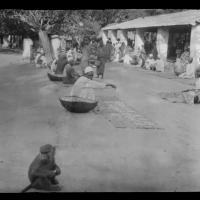
A photograph of the Fish market where a very small shiner is the chief fish at the market. There is a baboon in foreground that had stolen a handful of the fish. He is the terror of the market.
Beans, kaffir, eggplant, tomato
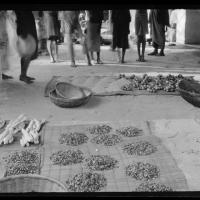
A photograph at the market where there are beans, kaffir corn, eggplant, tomato and manihot. There are several indigenous people standing in the back.
Empe oribo
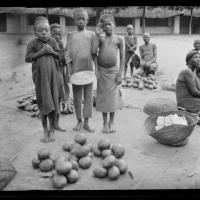
A photograph of indigenous adults and children around several piles of empe oribo, a type of mango in market at Ndjindji. The average size of the mango is about 4 inches long.
Manihot
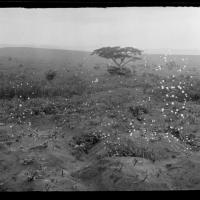
A photograph of just planted manihot with a large tree and storks in the back.
Herb
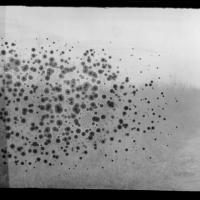
A photograph of cymbopogon that didn't turn out well.
Manihot, corn and sweet potatoes
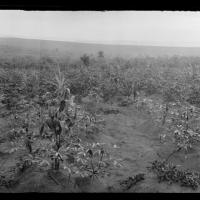
A photograph of manihot, corn, and sweet potatoes planted in the hills. There is cassava in the back and oil palm further back.
Sweet potatoes

A photograph of sweet potatoes planted in the hills, which is typical in this area.
Mushroom
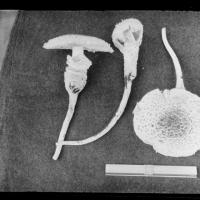
A photograph of large white mushrooms with a 10 inch slide ruler below it.
Sweet pumpkin

A photograph of both ends of the sweet pumpkin.
Sweet pumpkin

A photograph of a sweet pumpkin that is prized locally. It is cut in half and has a green color.
Corn

A photograph of four ears of local corn that are half their natural size.
Eggplant
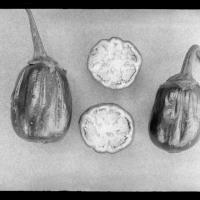
An up-close of two whole green eggplants in between another egg plant that is cut into two halves.
Oil palm
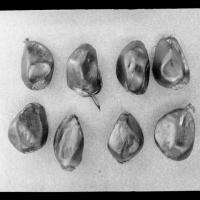
An up-close photograph of two rows of oil nuts.
Paprika
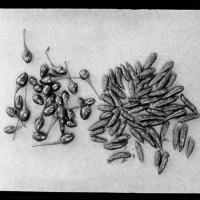
An up-close photograph of two types of paprika that are grown in the area.
Pomegranates
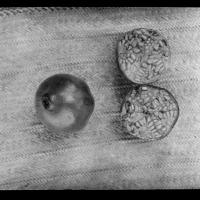
An up-close photograph of a whole pomegranate and another one cut in half.
Soursop (fruit)

An up-close photograph of a soursop grown here.
Bananas

An up-close photograph of two common types of bananas grown in Kigoma.
Empe kino
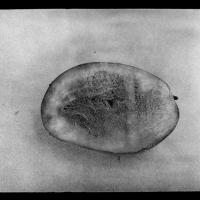
An up-close photograph of a type of mango called empe kino. This one is half its natural size but cut in two to show flesh.
Empe kino
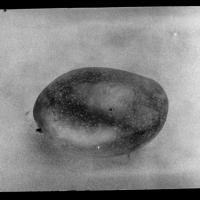
An up-close photograph of a third type of mango called empe kino. It is long in size but inferior in flavor as it is probably not a fully developed fruit.
Empe oribo
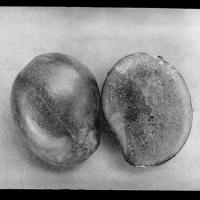
An up-close photograph of one whole empe oribo and one cut in half. The fruit's flesh is similiar to empe toto.