Browse Items (9335 total)
Sort by:
Grassland
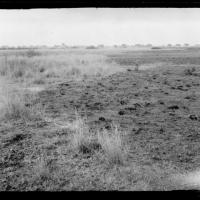
A photograph that shows burnt and unburnt grassland in Mafeking. This grassland being near the city is somewhat overgrazed.
Grassland
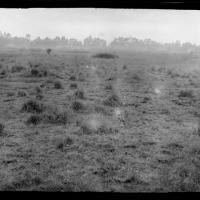
A photograph that shows burnt and unburnt grassland in Mafeking. The bunchy nature of the grassland can be seen in the foreground. There are also some acacia and eucalyptus in the background.
Valley
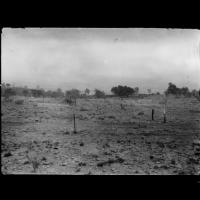
A photograph of across the valley with acacia and tall grass.
Plowing
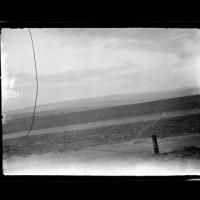
A photograph of themeda grassland with plow in the foreground. Much of the country is settled and corn seems to be the chief crop. The soil is chocolate or reddish and appears dark in the photograph as compared with the grassland.
Dr. J. Burtt Davy
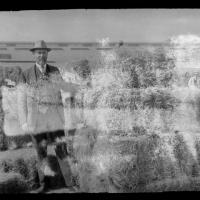
A photograph of Dr. J. Burtt-Davy, the man who introduced teff into the Transvaal. He first tried it in California and then took it to Transvaal with him when he went to South Africa.
Market

A photograph of people standing around as teff hay is sold in the market in Johannesburg at 15 pound to 16 pounds and 10 shillings per ton. The auction method is universally used in South African markets.
Hay market
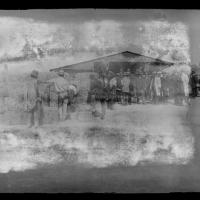
A photograph of people standing around as teff hay is sold in the market in Johannesburg.
General view of hay market
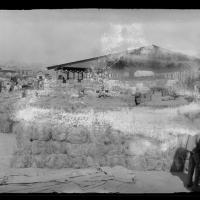
A photograph of the hay market showing teff, a small kind of oats cut and baled as hay. There are also bales of themeda, field dried, and selling at 2 shillings 6 pence for 30 pounds.
Oranges
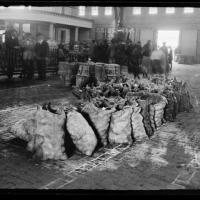
A photograph of oranges marketed in small gunny sacks. There are a few shown in baskets on the left.
Green barley
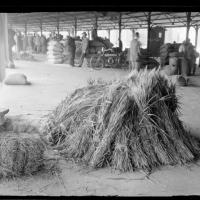
A photograph of green barley put up in small sheaves about 3/4 inches in diameter. Alfalfa is sometimes sold in the same way. Green barley is sold as feed in most African markets.
Hay market
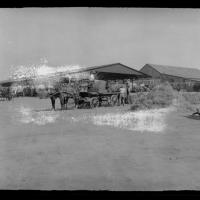
A photograph of the hay market. Teff is by far the most important. Then there is wild hay that is cut when dry, oat that is almost ripe, flax hay that is cut dry for bedding, and alfalfa.
Papaya
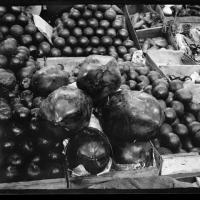
A photograph of papaya in the market. They are exceptionally large fruit, 12 inches long and 7 inches in diameter. They are bringing about 2 to 3 shillings each.
Botanical Dept.

A photograph of the botanical department at Pretoria. It consists of a series of small workships or laboratories with botanical garden-like grounds, made up of mostly mesembryanthemum, agave, and aloe.
Typical high veld
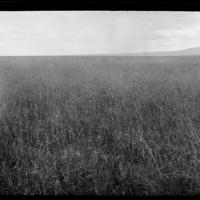
A photograph of a typical high veld of Transvaal grassland, dominated by themeda forskalii.
Grassland
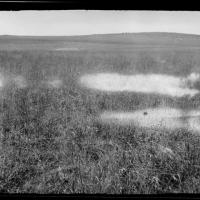
A photograph of the grassland dominated by themeda forskalii, a tall, bunch-like cover about 2 1/3 to 3 feet high.
Typical Themeda grassland

A photograph of typical themeda grassland and a hill in the background covered with grass and protea abyssinica.
Grassland
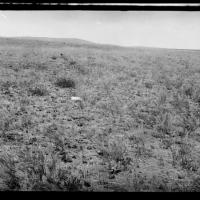
A photograph of grassland after burning. It shows a growth of the deep-rooted or storage-rooted plants such as elephantorrhiza burchellia, indiogofera hilaris, hypoxis obtusa, and clerodendron triphyllum.
Themeda forskalii
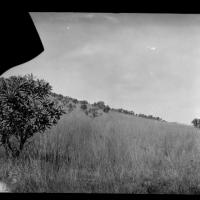
A photograph of the themeda grassland with a few plants of protea abyssinica. This photograph was taken on the hills opposite the government buildings.
Themeda grassland
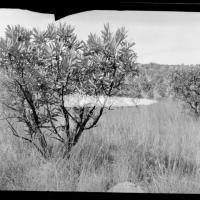
A photograph of themeda grassland with protea abyssinica.
Sorghum

A photograph of sorghum vulgare grown by the Basotho, known under the Sesuto name as Letsoeyene.